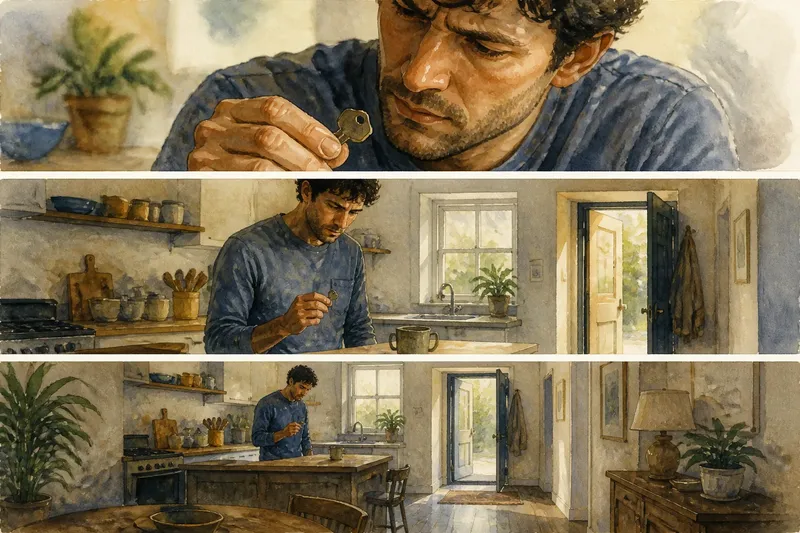
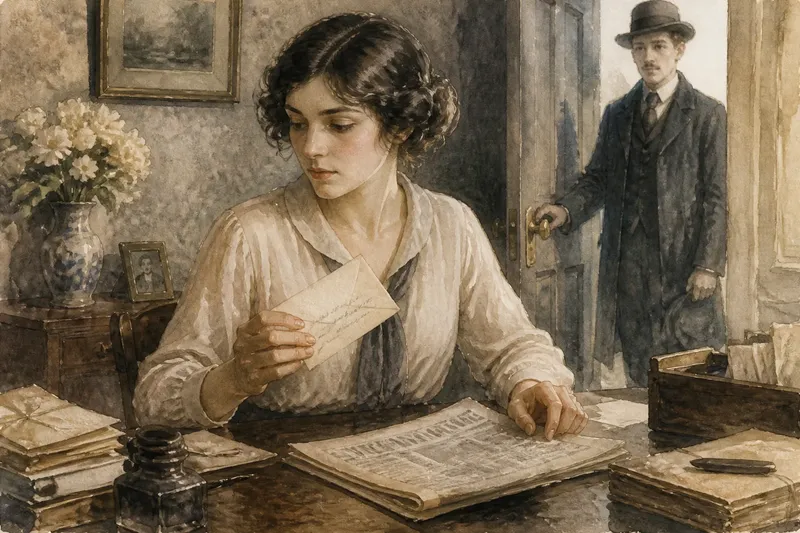
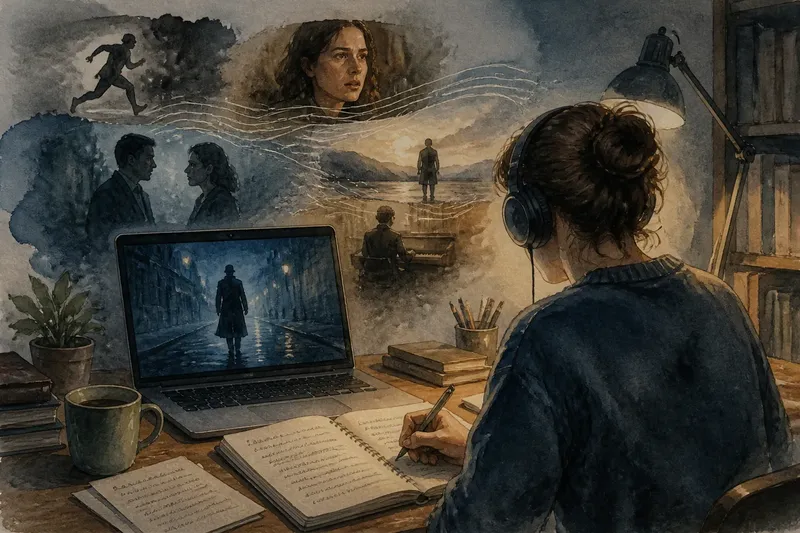
The Reaction Shot and the Meaning of a Pause
Learn how a reaction shot shifts a line’s emphasis to the listener, shaping tension, irony, intimacy, or doubt through timing and the cut.
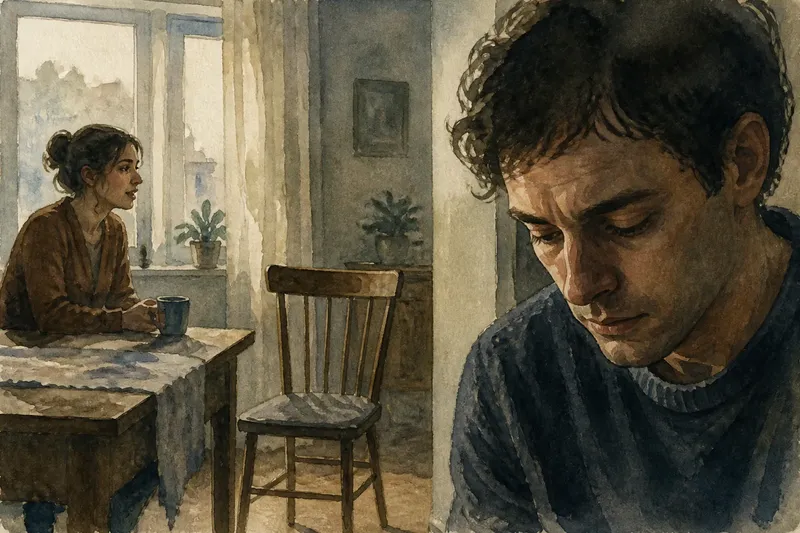
A reaction shot can make a listener’s silence carry more meaning than the line that prompted it. In editing, the reaction shot shifts emphasis from the speaker’s words to what another character appears to hear, resist, or conceal. The pause is not empty space: its length, placement, and relation to the dialogue guide the audience toward an interpretation without settling every question.
What makes a shot a reaction shot?
A reaction shot shows someone responding to an event, gesture, or line, often while another character speaks or immediately afterward. The response might be visible in a face, but it can also come through a held posture, a glance toward the door, or a hand that stops moving.
The cut creates the relationship. A close view of a listener following a pointed remark suggests that the listener’s response matters now; staying with the speaker would keep attention on delivery, wording, or intent. The editor’s choice is therefore not just which image to show, but whose experience should organize the moment.
A pause is the interval in which the audience watches that response unfold. It can begin before the cut, continue after the speaker finishes, or be shaped by a return to the speaker. The same silent look may feel like a challenge, a wound, or a calculation depending on where it lands in that sequence.
How does the cut change a line’s emphasis?
Dialogue has more than one possible center of attention. A speaker may intend a statement as reassurance, while the listener’s expression makes it sound like a threat. Cutting to the listener lets the audience notice the gap between what was said and how it was received.
Consider an invented scene: Mara tells Eli, “I kept your place.” As she says it, the edit cuts to Eli, who looks at an untouched chair and then lowers his eyes. The line may now carry grief or accusation, rather than simple kindness, because the shot directs attention to the cost of the gesture for Eli.
The cut does not prove what Eli feels. It offers evidence for the audience to interpret: the lowered gaze, the chair, and the timing of the edit. If the film later returns to Mara’s face, her expression may complicate the first reading by revealing that she expected a different response.
This is why a reaction shot can alter a line without changing a word. It redirects emphasis from the speaker’s intended meaning to the listener’s apparent experience. The dialogue remains fixed, but the scene’s center of gravity moves.
Why does the timing of the pause matter?
A cut during a line makes the listener’s response part of the line’s delivery. It can suggest that the words have already affected the listener, or that the speaker is watching for a reaction. A cut after the line gives the response more room to register as an answer, even if no one speaks.
The duration of the held image also changes the audience’s task. A very brief reaction can act like punctuation: a flicker of recognition, a quick wince, a glance exchanged. A longer hold asks viewers to study the silence and may make them wonder what the character is choosing not to say.
There is no fixed duration that makes a pause feel meaningful. A moment can feel long when a character’s expression changes, when a sound continues, or when the preceding dialogue creates a clear expectation of reply. It can feel brief even when the image holds if attention is moving elsewhere, such as toward a door opening in the background.
Editors can also shape the pause through the return cut. If the film cuts back to the speaker before the listener responds, the audience may feel that the speaker is reclaiming control. If it stays with the listener through the speaker’s next line, the listener’s silence can remain the scene’s dominant fact.
What can a listener’s silence communicate?
Silence does not have one universal meaning. A listener who says nothing might be unable to answer, unwilling to answer, waiting for more information, or choosing a response that cannot be expressed safely. The image and surrounding action help narrow these possibilities without requiring the character to explain them.
A reaction shot can create dramatic irony when the audience sees that the listener understands more than the speaker realizes. A small pause before a neutral reply may suggest recognition, while the spoken answer keeps the recognition hidden. The audience watches two layers at once: the public conversation and the listener’s private adjustment.
The same device can make a scene feel intimate. By holding on a listener who does not perform an obvious emotion, the edit gives viewers time to notice a slight change in attention. The restraint can feel more personal than an emphatic reply because the audience is invited to observe rather than told how to interpret the moment.
Silence can also unsettle. If the speaker expects agreement and the edit stays with a listener who offers none, the missing response becomes a source of pressure. The tension comes from the mismatch between the conversational cue and what the image shows.
How do sound and continuity shape the pause?
A reaction shot does not have to silence the speaker. Dialogue can continue over the listener’s image, allowing the audience to hear the words while reading their effect. This is often called an L-cut when the audio from a preceding shot continues into the next image; the term describes the sound-image overlap, not a particular emotional result.
That overlap can preserve the speaker’s presence while shifting visual attention. If the speaker’s final words continue over the listener’s face, the line may feel less like a statement and more like something being absorbed. When the speech ends and room tone remains, the silence can become more exposed.
Room tone is the low-level ambient sound of a space, such as ventilation, distant traffic, or a refrigerator hum. Keeping it through a pause makes the scene feel continuous and inhabited. Removing it can make the silence feel stylized or unnaturally isolated, though that effect depends on the film’s broader sound design.
Continuity also matters. The listener’s posture and eyeline should make sense across the cut, so viewers can follow who is looking at whom and what has changed. A small mismatch may be expressive if it feels deliberate; an unexplained shift can instead distract from the response the editor wants us to notice.
How can you read a reaction shot without overinterpreting it?
Separate what the image shows from what you infer. “She looks down after the question” describes an observable action; “she feels guilty” is an interpretation. Keeping those apart makes it easier to see how the film supports several readings or leaves the character’s response unresolved.
- Notice the exact point where the edit leaves the speaker.
- Watch the listener’s face, hands, posture, and eyeline without assigning a feeling immediately.
- Listen for whether dialogue continues over the new image or stops at the cut.
- Track how long the film holds on the listener before returning elsewhere.
- Ask what the next cut confirms, complicates, or leaves uncertain.
These observations are especially useful when a scene seems to have changed meaning on a second viewing. The words may be identical, but a newly noticed glance or a longer hold can reveal why the listener’s response became more important than the speech itself.
Which questions help explain a reaction shot?
Can a reaction shot change the meaning of a line?
Yes. It can shift attention from a speaker’s intended message to the listener’s visible response, changing whether the line reads as tender, threatening, ironic, or uncertain. The shot offers an interpretation for viewers to consider rather than an absolute explanation.
Does a reaction shot always show a face?
No. A hand withdrawing from an offered object, a body turning away, or a gaze fixed on something outside the conversation can carry the response. The important feature is that the image presents a character’s reaction as relevant to the moment.
What is the difference between a reaction shot and a pause?
A reaction shot is an image choice; a pause is a stretch of time in the scene. A reaction shot may occur without a long pause, and a pause may remain on the speaker or another part of the scene rather than cutting to a listener.
When does a reaction shot feel too obvious?
It can feel blunt when the expression states the same emotion already made unmistakable by the dialogue, with no added tension or nuance. But a clear response may be appropriate when the scene needs a direct emotional turn; subtlety is not the only valid purpose.
What should an editor preserve in the final pause?
The most useful reaction shot is not necessarily the one with the strongest expression. It is the image that gives the audience something meaningful to observe at that point in the conversation, whether that is a change in posture, a delayed glance, or a refusal to answer.
When assessing the cut, consider what the scene asks viewers to notice and whether the pause gives them enough room to notice it. A reaction shot may clarify a response, complicate a line, or keep both meanings in play; its force comes from the precise relationship among image, sound, dialogue, and time.
The next time a line seems to land differently than its wording suggests, watch the listener when the edit takes you there. That pause may be where the scene makes its real argument.