The Film-Music Myth: A Cue Does Not Dictate One Feeling
Film music gains meaning from image, timing, and context. Learn to hear how a cue’s placement changes a scene without treating its emotion as fixed.
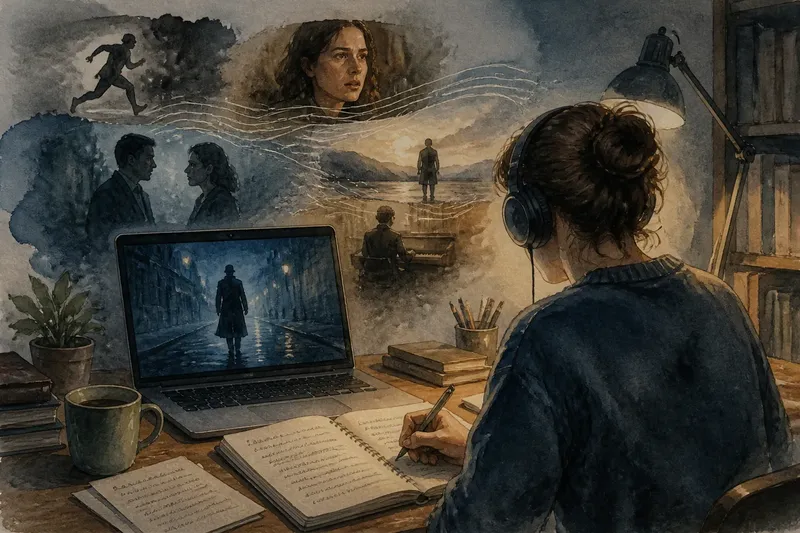
A low cello note can make a quiet room feel threatening, tender, or simply still; film music has no fixed emotional meaning apart from the scene that gives it a place. To hear how context shapes a cue, follow it through a film in several passes across a week, noting what changes when the image, timing, or surrounding sound changes.
This routine is for attentive viewing, not score analysis: you do not need musical training or specialized software. Choose a film you can pause and replay, and keep a notebook or a document open beside you. The aim is to separate what the music supplies from what the scene asks you to feel.
What should you choose before listening closely?
Pick a film with a few distinct musical passages and scenes that make sense without explanation. A streaming player with reliable pause and rewind controls is enough; VLC can also help if you have a local video file. Use headphones or speakers at a comfortable level, and avoid changing the playback setup between sessions.
Set aside one short scene for close attention, but watch the full film first. That initial viewing lets you experience the story without turning every cue into a puzzle. In your notes, record the scene’s basic situation and the moment when music begins, changes, or stops.
Keep your descriptions plain. “A sustained high tone over a slow pulse” is more useful than “sad music,” because it records an audible quality without deciding what that quality must mean. If you cannot identify an instrument, describe its sound instead: bright, rough, pulsing, sustained, or faint.
How can you build a week of listening?
Use each viewing pass to test a different part of the cue’s context. A schedule keeps observations distinct and prevents a strong first impression from becoming the only explanation.
- Day one, watch the whole film. Let the score work as part of the story. Afterward, mark a few scenes where music noticeably altered your attention or where you felt unsure what it was doing.
- Day two, revisit one scene with sound. Watch the selected passage without pausing. Write down what you expect to happen, what the characters appear to want in that moment, and what the image emphasizes.
- Day three, listen without watching. If your player allows it, turn the screen away or play the passage while facing elsewhere. Note the emotions the music suggests, but also record uncertainty: a cue may support several readings at once.
- Day four, watch the passage muted. Keep the image and dialogue, but remove the soundtrack. Notice whether a face, gesture, setting, or edit carries the feeling you had attributed to the music.
- Day five, compare a nearby scene. Choose a moment with a similar cue, musical texture, or dramatic situation. Ask whether the score has the same effect when the characters’ intentions or the visual information differ.
- Day six, examine timing. Replay the passage and note when the cue enters and leaves. A musical phrase that begins before a reveal can prepare expectation; the same phrase arriving afterward can sound like recognition or loss.
- Day seven, write a short account. Explain what the cue seemed to mean on first viewing, then identify the image, timing, and story details that complicated that reading. Keep competing interpretations if the scene supports them.
If a film offers no convenient way to isolate the audio, do not force the exercise. A muted viewing and careful attention to the cue’s entrances and exits can still reveal how the soundtrack shares the scene’s work.
Why does the same cue change meaning?
Music reaches the audience alongside visible action and story information. A repeated rhythm can suggest urgency during a pursuit, then become an uncomfortable reminder when it returns in a calm setting. The rhythm has not acquired a new dictionary definition; the scene has changed the conditions under which you hear it.
Timing is one of those conditions. A cue that starts before a character opens a door may invite you to anticipate danger, even if the room proves harmless. If the same sound begins after the door opens, it may seem to register the character’s reaction rather than predict an event.
Image can also redirect a familiar musical gesture. A rising melody may often accompany triumph, but its ascent can feel strained when paired with a character struggling to keep a promise. The picture does not merely illustrate the music: it can affirm, qualify, or contradict the feeling the cue first suggests.
Story knowledge matters, too. A melody heard before you know its source may seem ominous; after the film connects it with a character or memory, the return can carry recognition alongside dread. This is why a cue’s effect can shift on a second viewing without any change in the notes.
What should you listen for besides mood?
Instead of asking only whether a cue is happy or sad, notice the job it performs in the scene. It may draw attention toward a detail, make a pause feel longer, smooth a transition, or establish a pattern that the film later breaks.
Listen for the relationship between score and other sound. Music may sit beneath dialogue, compete with a machine’s hum, or give way to room tone. When a cue stops, the sudden presence of footsteps or breath can make the silence feel active rather than empty.
Also ask whether the music appears to belong to the story’s world. A song playing from a radio is heard by the characters; an orchestral cue added over the scene generally is not. That distinction affects how the music relates to performance and setting, but it still does not lock the cue into one emotion.
Imagine you are watching a character pack a suitcase while a gentle piano melody plays. At first, you might hear the scene as a sorrowful farewell; then a close view of a carefully folded uniform and the character’s steady expression could make the same melody feel restrained or ceremonial. If the cue began after the case was closed, it might seem to mark a decision already made rather than mourn the departure.
How do timing and context change a cue’s effect?
Can the same music feel hopeful and unsettling?
Yes. A clear, rising phrase can suggest hope, while a scene that reveals what the character is sacrificing can make that hope uneasy. The music’s shape remains audible, but the image changes what its optimism costs.
Why does music sound different on a second viewing?
The first viewing gives you incomplete story information, so a cue can guide expectation before you understand its full context. On a later pass, knowledge of what follows can make the same entrance feel like warning, irony, or a detail you missed.
What does silence after a cue add?
Silence can expose sounds the music had covered, such as a breath, a footstep, or the room’s faint ambience. Its effect depends on what came before and what remains visible, so silence is not automatically peaceful or ominous.
Does a recurring theme always mean the same thing?
A recurring theme invites comparison, but each return arrives with different images, story knowledge, and timing. Track what changed around the melody rather than assuming its first association controls every later appearance.
How can you describe a cue without pinning it down?
Use a three-part note: describe what you hear, state your first response, and name the scene detail that supports or unsettles it. For instance: “A soft pulse repeats beneath the dialogue; I initially hear anticipation; the character’s fixed gaze makes it feel more like dread.” This keeps perception and interpretation separate.
When your reading changes, preserve the first note rather than replacing it. A useful account might say that the cue first seemed comforting, then became ambiguous when the camera revealed that the character was alone. The shift is not a mistake to correct; it is evidence of how sound and image shape one another.
For a focused review, choose one music entrance and ask what it does at that exact point, not what the cue “means” in isolation. Film music can steer attention, color a gesture, or complicate a scene, but its emotional force remains tied to context. That is the useful principle to carry into your next viewing: describe the cue’s effect, then name what in the scene made that effect possible.