Close-Up, Medium Shot, or Wide Shot: What Each Viewpoint Reveals
Learn what close-up, medium, and wide shots reveal first, so you can read a scene’s attention, relationships, and space without losing its context.
A close-up, medium shot, or wide shot changes what a viewer can know at a glance. In a scene at a kitchen table, a close-up might make a trembling hand the first thing you notice; a wide shot might show who is watching it and how far away they sit.
These framings are not simply three levels of emotional intensity. Each makes certain information easy to read and other information harder to see. Watching for that trade-off helps explain how a scene directs attention without telling you what to feel.
What does a close-up ask you to notice first?
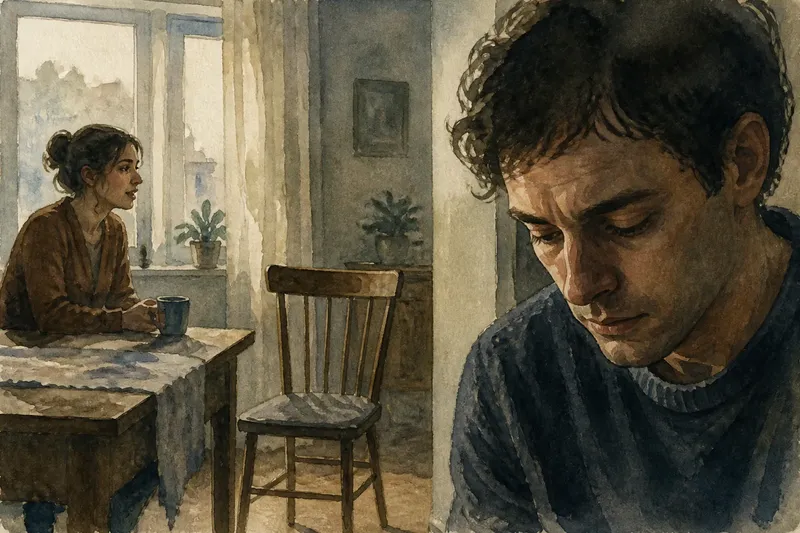
A close-up brings a face, hand, or small object into prominence. Because the frame leaves much of the surrounding space out, viewers can inspect details such as a tightened jaw, a glance toward the door, or a thumb rubbing a paper cup.
That detail can carry several meanings, though. A close-up of a face might reveal concentration, conceal a reaction from other characters, or make an ordinary expression feel unusually exposed. The image directs attention to the visible detail; the surrounding scene still shapes how that detail reads.
Close-ups are especially useful when a small change matters more than the room’s layout. If a character reads a message, a close-up can make the screen or the reader’s expression prominent. But if the other person’s response matters too, a single face-focused frame may postpone that information.
Notice what the close-up excludes. A character looking offscreen might be watching a person, a sound’s source, or something they have not yet identified. The withheld surroundings create a question, while the face or object remains the immediate evidence.
What information does a medium shot keep in view?
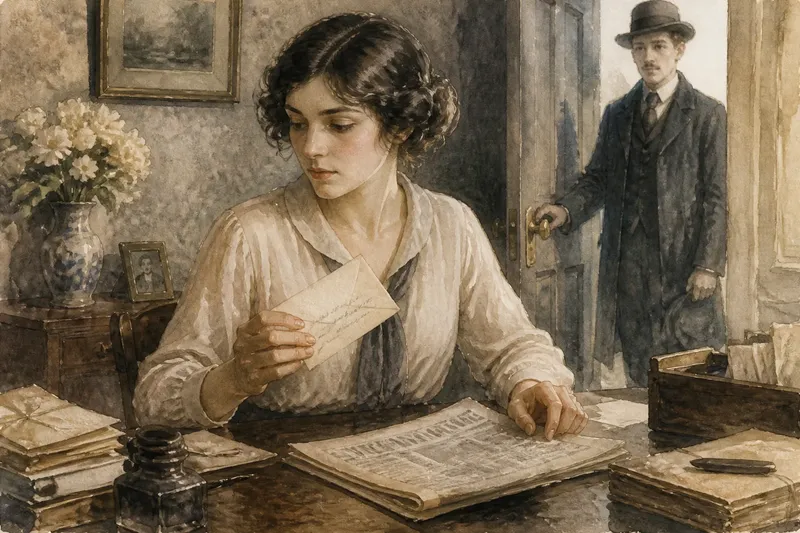
A medium shot usually shows a person from around the waist or chest upward, though the exact crop varies. It can keep facial expression, upper-body movement, and part of the setting readable at once.
This makes it useful for conversation and everyday action. You may see someone turn away, reach for a chair, or hold a doorway while still reading their expression. The frame offers more behavioral context than a close-up without making the room itself the main subject.
A medium shot can also clarify interaction. Two people may share the frame, allowing you to compare their posture and distance without cutting between them. If one leans forward while the other stays still, that contrast is visible as a relationship in space, not only as a pair of expressions.
Yet a medium shot can leave small details ambiguous. A hand may move, but the frame may not make clear what it touches. The useful question is whether the action’s broad shape is enough, or whether a particular object or expression needs closer attention.
What does a wide shot tell you that a close-up cannot?
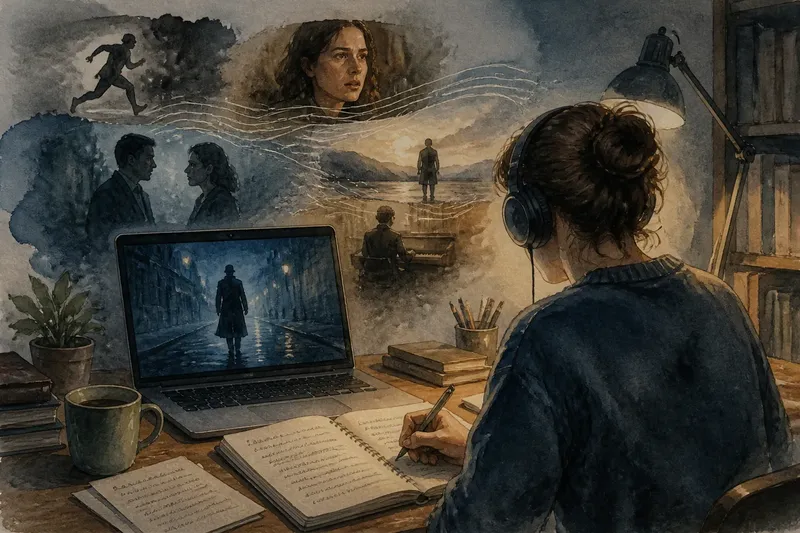
A wide shot makes more of the environment visible: the room, the distance between people, entrances, obstacles, or the landscape around them. It helps establish where bodies are and what their surroundings permit them to do.
In a crowded station, for instance, a wide view can show one character standing apart from a group or struggling to cross a busy platform. A close-up might make the character’s worry clearer, but it would not by itself show the crowd’s arrangement or the route ahead.
Wide framing can make a person seem small within a setting, but size alone does not dictate meaning. A large room might suggest isolation, freedom, formality, or simply the practical scale of the location. The action and composition decide which reading gains support.
It can also distribute attention among several details. A viewer may notice a figure near the edge, an open doorway, and another person in the foreground in whatever order the composition allows. That wider field offers evidence for connections that a tighter frame may leave outside the image.
How can framing distance change a scene’s meaning?
Framing distance changes which evidence arrives first, not the underlying facts of the scene. A close-up can make a private response prominent; a wide shot can place that response among other people and visible surroundings.
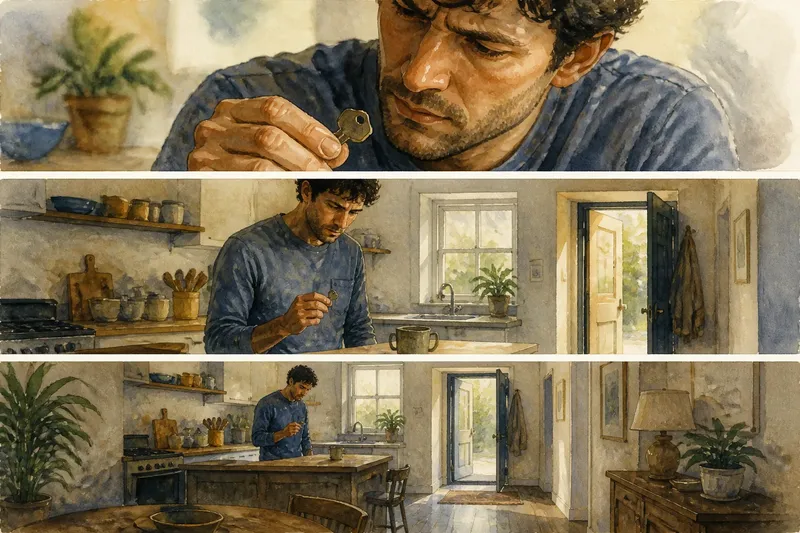
Imagine a scene in which a tenant finds a key on a kitchen counter. If the camera frames the key closely, you may first wonder whose it is or why it has been left there. If the frame includes the tenant, the empty room, and the open front door, the key becomes part of a larger question about who has left and where they might have gone.
The same event can therefore invite different initial questions. A close view can ask, “What does this detail mean?” A wider view can ask, “How does this detail fit into the situation?” A medium view often keeps a person’s response and nearby action available together.
Do not treat those questions as fixed rules. A wide composition can draw attention to a tiny object if it sits in a striking patch of light, while a close-up can feel detached if the action around it has not been established. Distance is one part of the image’s organization, alongside placement, movement, focus, and contrast.
How do you tell what a shot wants you to see first?
Start with the most visually prominent element, then ask what the frame has made easy or difficult to inspect. A character’s face may be prominent because it occupies the image, but a bright object behind them may compete for your attention.
- Find the first point of attention. Is it a face, an object, a gesture, or a stretch of space?
- Check what remains visible around it. Can you read another person’s response, the location, or the action’s consequence?
- Notice what is cropped out. Does the missing context create uncertainty or keep attention on one detail?
- Compare the people’s positions. Does the frame show separation, closeness, a barrier, or a shared task?
- Watch for movement within the frame. Does a person or object become noticeable by entering, leaving, or crossing the composition?
These observations describe how the image guides attention, not what every viewer must feel. Two viewers can agree that a close-up emphasizes a face and still interpret that face differently because of the scene’s dialogue, timing, or earlier events.
Why does a film move from a wide shot to a close-up?
A change in framing can redirect attention as a scene develops. A wide shot may first establish who is present and where they stand; a closer shot can then isolate a decision, expression, or object that has become newly important.
The change also affects how much context travels with the subject. Moving closer can make a gesture easier to read while removing the room’s other activity. Moving wider can restore the larger arrangement and show how a private action affects the people around it.
Pay attention to the moment of the change. If a character has been speaking while the camera holds a wide view, a close-up might arrive when they stop, when another person reacts, or when a small action shifts the scene. The timing tells you that the detail has become newly relevant, even before its meaning is settled.
A change in distance does not have to signal a stronger emotion. It might clarify geography, reveal a practical detail, or alter whose behavior is available for comparison. Ask what information the new framing adds and what it trades away.
What should viewers ask about close, medium, and wide shots?
Is a close-up always more emotional than a wide shot?
No. A close-up gives a facial expression or detail more visual space, but the expression’s meaning depends on the scene. A wide shot can feel intense if it makes a person’s exposure, distance from help, or position among others immediately apparent.
Can a medium shot show more than one character clearly?
Yes, when the composition places them within the frame and gives their actions room to read. Look at their spacing, posture, and shared surroundings; the shot may make their relationship visible without isolating either face.
Why might a scene stay wide during an important moment?
A wide frame can keep the event’s setting and consequences in view instead of concentrating on one person’s reaction. It may also leave viewers to choose among several visible details rather than directing them toward a single face.
How can I tell whether a shot is close, medium, or wide?
Look at how much of the subject and surroundings the frame includes. A close-up isolates a face or detail, a medium shot commonly includes a person’s upper body and nearby space, and a wide shot gives the setting a substantial role.
How can framing distance sharpen your next viewing?
Track one change in a scene rather than trying to classify every shot. When the framing shifts, note what became easier to see and what disappeared. That simple comparison can reveal whether the film is asking you to attend first to a face, an action, a relationship, or the place in which it unfolds.
For a close-up, medium, or wide shot, the most useful question is not which distance is best. Ask what the chosen view lets you notice now, and what the film is keeping beyond the frame until later.